
What finally makes someone fix their finances?
A Rose Cove survey of 1,011 American adults found that most would act for $600 a year or less, yet many keep paying more. Here is what they told us would help.
Written by the Rose Cove editorial team
Published Nov 10, 2026 · 6 min read
- 52%kept paying a bill, fee or interest charge despite a cheaper option
- 72%would act for $600 a year or less. The median is $300.
- 39%found a better deal but didn’t switch. It felt like too much work.
Key takeaways
- Half keep paying more. 52% of people putting off a financial task kept paying a bill, fee or interest charge last year, even though they believed a cheaper option existed.
- Waiting can cost as much as acting would save. 44% of people putting off a task say last year’s delay cost at least as much as the yearly savings that would get them to act.
- The bar for acting is low. 72% of people putting off a task would act for $600 a year or less in savings. The median answer is $300.
- Switching feels like work. 39% of everyone surveyed found a better deal and decided switching was too much effort.
- Subscriptions are a steady leak. People putting off canceling a subscription spend $76 a month on average, about $912 a year, on services they mean to cancel.
- Stress calls for a smaller step. 44% of people who find the task stressful want one small step they can take right now, compared with 32% of everyone putting off a task.
- People will answer questions, not hand over accounts. 49% would answer a few questions for a free plan. 16% would connect their accounts.
Half want a savings estimate or a recommendation. The right help depends on what's in the way.
50% of people putting off a financial task say a savings estimate, a personal recommendation, or both would help most to finish it in the next 7 days. A savings estimate is the top answer (36%), followed by one small step they could take right now (32%).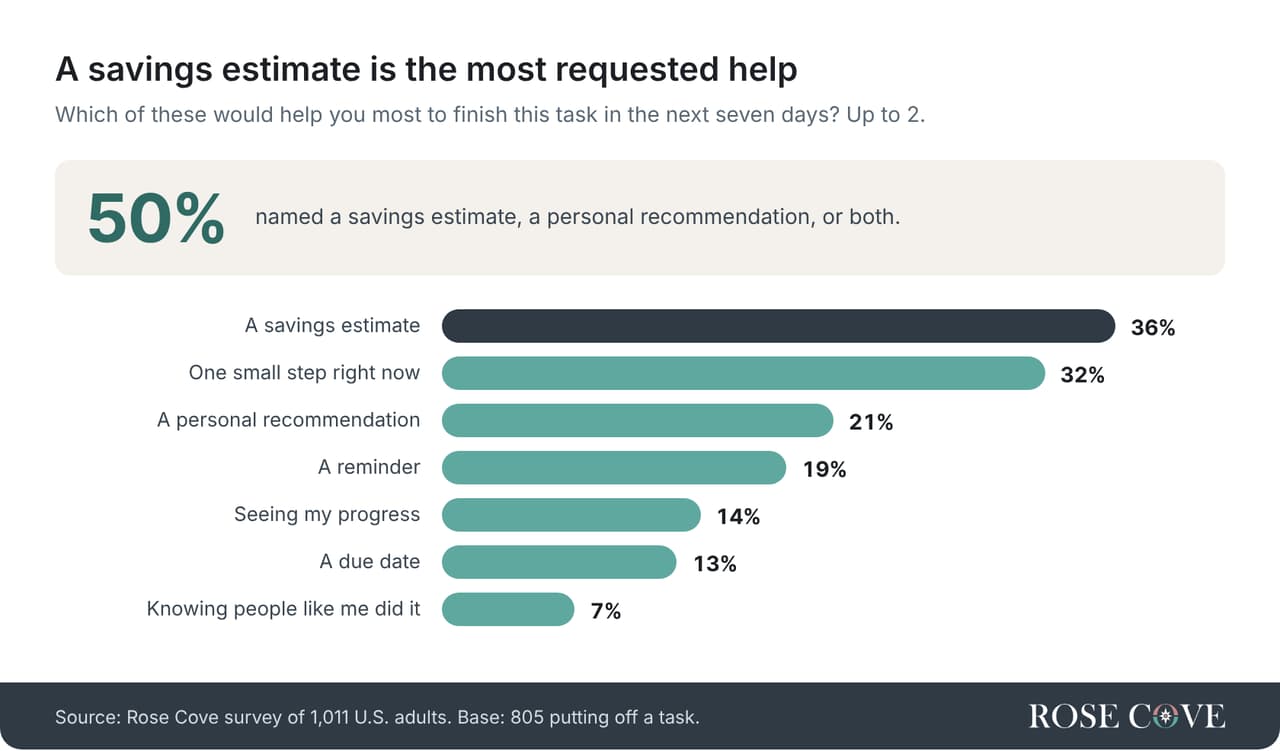
● 44% of people who feel stressed by the task want one small step they can take right now, their top request.
● 36% of those who don't know where to start want a recommendation based on their situation, compared with 21% of everyone putting off a task.
● 32% of those whose task keeps slipping their mind want a reminder, compared with 19% overall.
● People who avoid looking at their money are the most open to help. Only 6% of people who have avoided checking a balance, bill or charge chose none of the options, compared with 22% of others putting off a task.
● Younger adults want to see progress. 19% of Gen Z and 16% of millennials picked a progress tracker, compared with 8% of Gen X.
● Debt works differently. Among people whose longest-delayed task is combining debts or refinancing a loan, only 10% want a reminder, about half the rate of everyone else (21%). Their barrier is doubt, as the next section shows.
Half kept paying more than they believed they had to
Unwanted subscriptions, fees and interest add up while tasks wait. 52% of people putting off a financial task kept paying a bill, fee or interest charge last year, even though they believed a cheaper option existed.
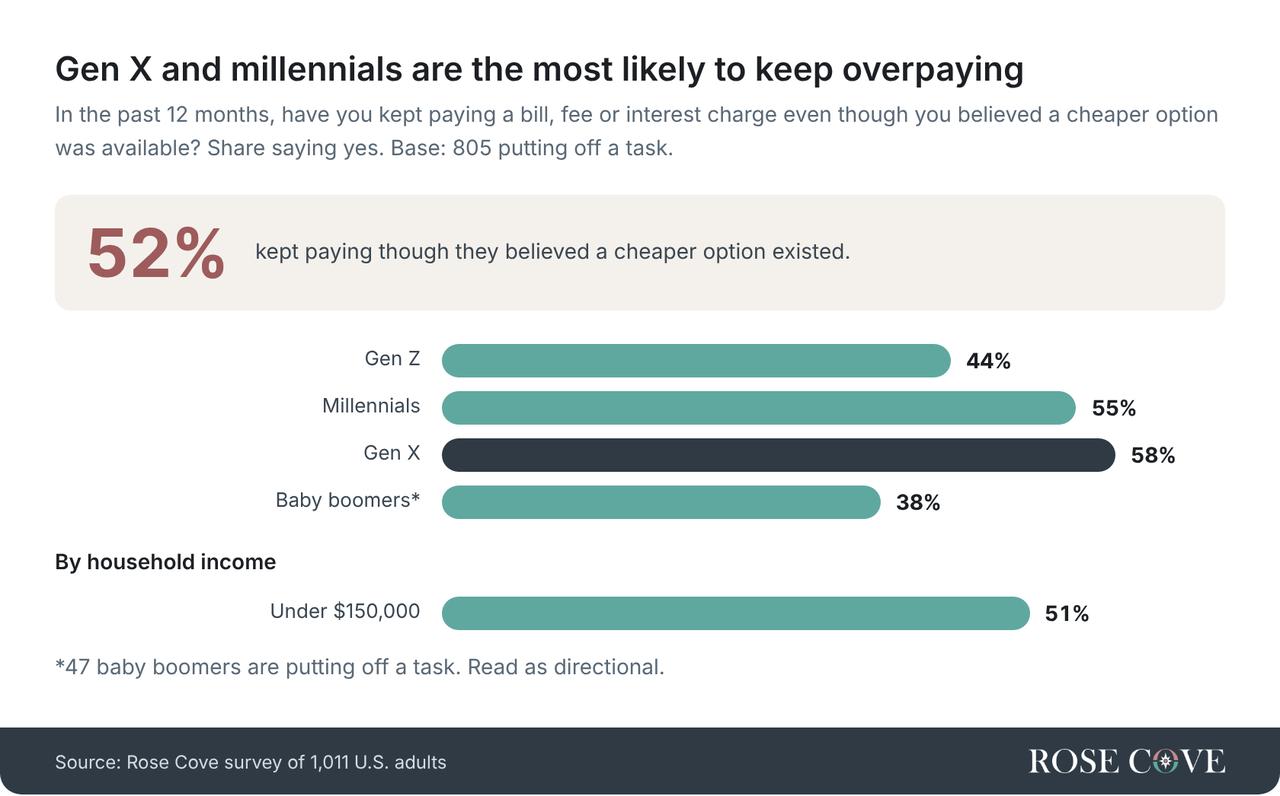
● Gen X (58%) and millennials (55%) were the most likely to keep paying, compared with 44% of Gen Z.
● The pattern holds below $150,000 a year: 51% of people in those households kept paying.
● For debt, doubt gets in the way. Among people whose longest-delayed task is combining debts or refinancing a loan, 18% doubt they would qualify for a better rate, compared with 5% of everyone else. 43% have avoided checking a credit card balance, compared with 24%.
● Subscriptions are a steady leak. People putting off canceling a subscription spend $76 a month on average on services they mean to cancel, about $912 a year. The median is $50 a month.
The bar for acting is low
Most people would act for modest savings. 72% would act for $600 a year or less, about $50 a month. The median answer is $300 a year.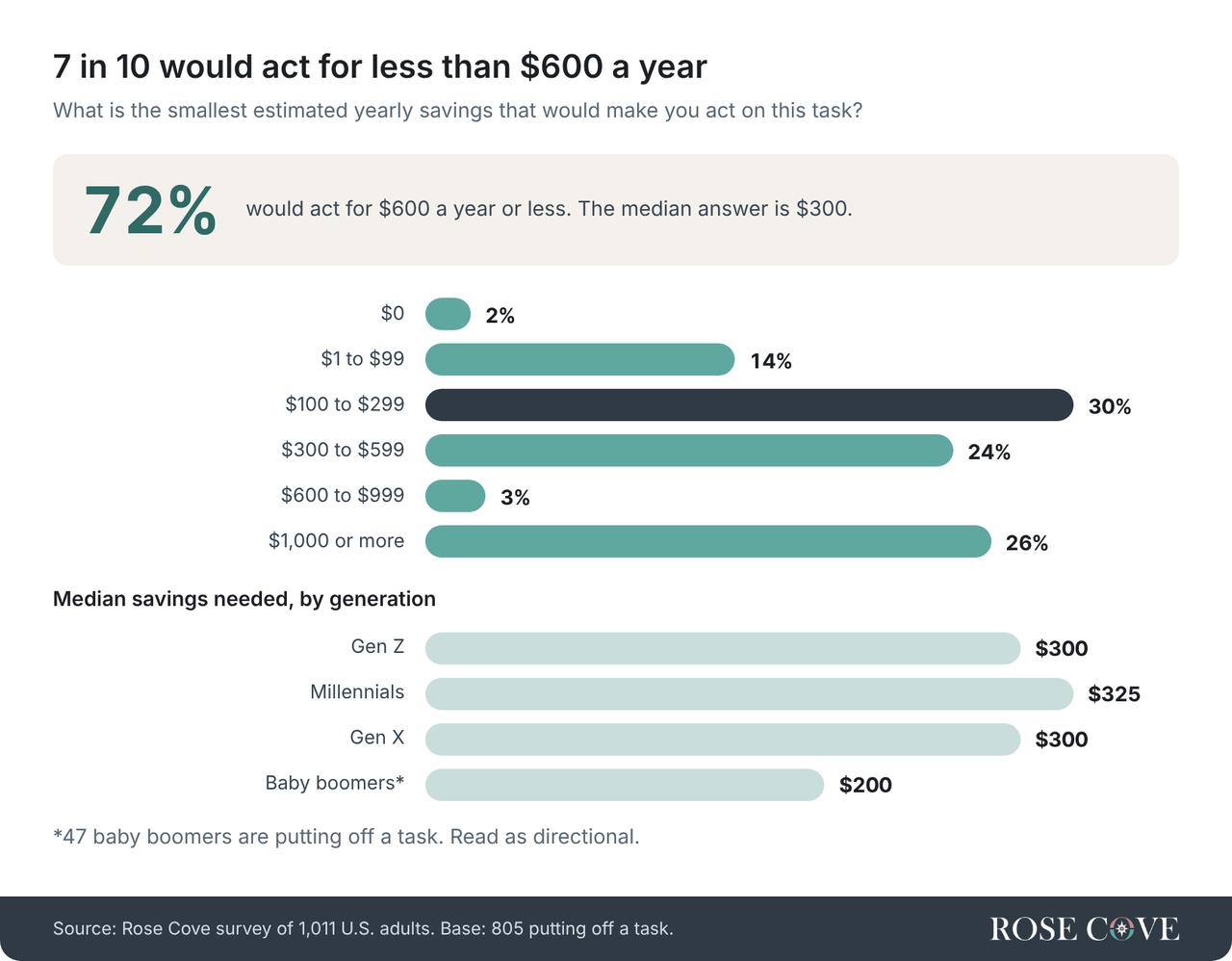
The bar is about the same for every age under 62. Gen Z, millennials and Gen X all have a median between $300 and $325, and about 7 in 10 in each group would act for $600 or less.
Many have already crossed it. 44% say last year's delay cost at least as much as the yearly savings that would get them to act.
So why wait? Switching feels like work. 39% of everyone surveyed have found a better deal and decided switching was too much effort, including 32% of Gen Z, 40% of millennials, 43% of Gen X and 41% of baby boomers.
Half would answer a few questions. 16% would connect their accounts.
We described a free service that compares financial options, estimates savings after fees and recommends a next step. Then we asked what people would share to get their results.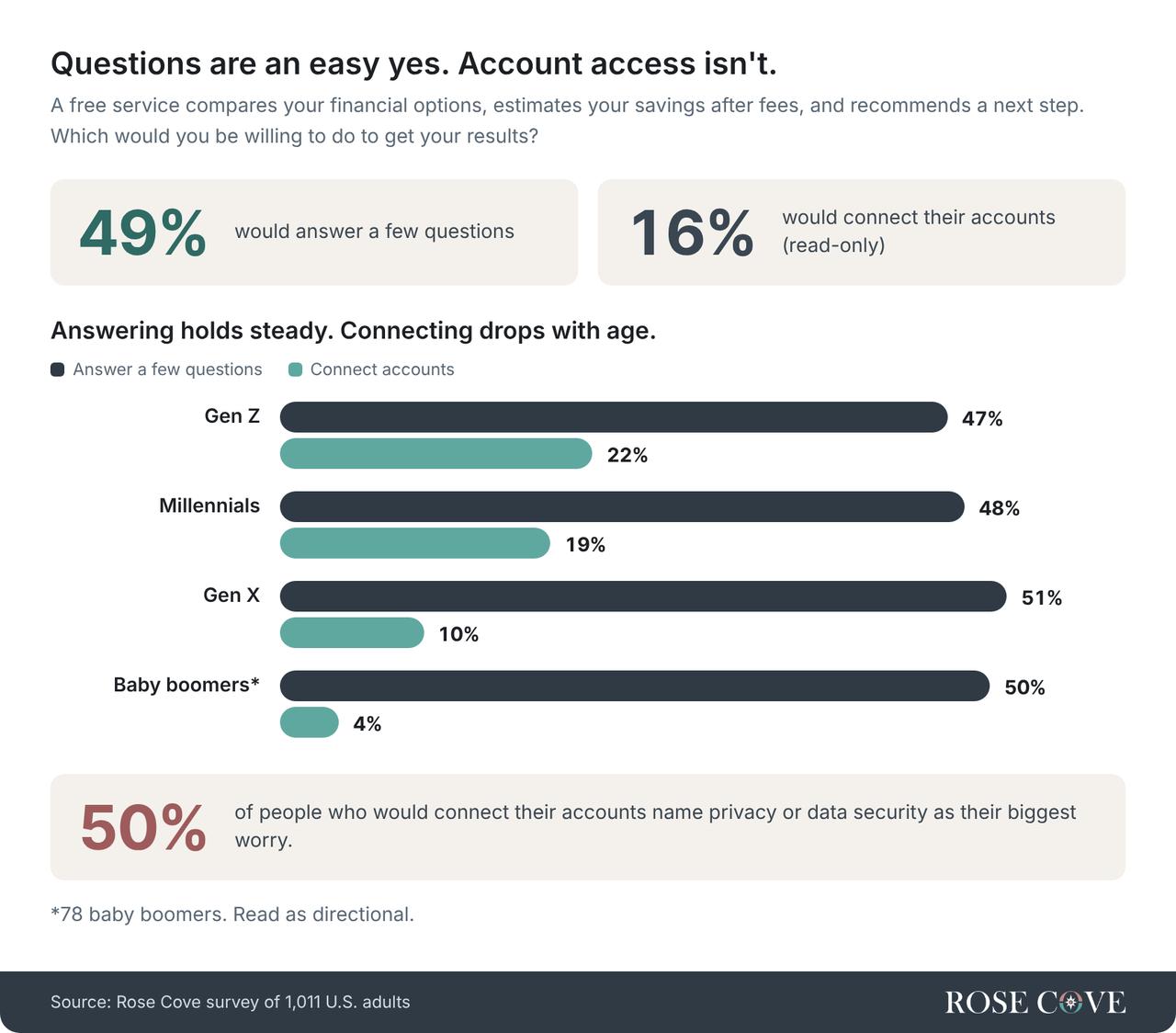
● 49% would answer questions for a free plan without connecting anything. 16% would give read-only access to their accounts. Among those willing to connect, 50% name privacy or data security as their biggest worry.
● Gen Z is the most willing to connect (22%), more than twice the rate of Gen X (10%). Answering questions appeals to every generation, from 47% to 51%.
● People who avoid looking are more willing to share. 71% of people who have avoided checking a balance, bill or charge would answer questions or connect accounts, compared with 58% of others putting off a task. They are twice as likely to connect accounts (23% vs. 11%).
● Trust has to be earned. Asked who they would trust most to do the math on their options, 41% said they would rather do it themselves. Financial advisors came next (24%), then banks (15%).
People don't need more reminders. They need a clear number and a small first step.
The survey points to a clear job for financial guidance. People respond to a clear view of the tradeoffs. 49% would share a few answers to get one. Only 16% would hand over their accounts.
Rose Cove starts with your situation. Answer a few questions, and in under 2 minutes we show your Next Best Move℠: one clear step, with the tradeoffs in plain view. You make the final decision.
Methodology
- Basis
- We surveyed American adults about the financial tasks they put off, from canceling subscriptions to combining debts.
Rose Cove surveyed 1,011 American adults on October 22, 2026, through CloudResearch Connect about the financial tasks they put off. Respondents chose any tasks they had on hold, such as canceling a subscription, moving money into savings, combining debts, comparing options, switching financial products or refinancing a loan. Results are not weighted. The sample included Gen Z (19%), millennials (47%), Gen X (25%) and baby boomers (8%, 78 people). Generations were based on reported age: Gen Z 18 to 29, millennials 30 to 45, Gen X 46 to 61 and baby boomers 62 and older. Results for baby boomers putting off a task are based on 47 people and should be read as directional. By gender, 50% are women and 49% are men.
80% (805 respondents) are putting off at least one financial task. Questions about their tasks, reasons, costs, what would help and how much savings would get them to act were asked only of these 805. Comparisons for debt tasks use the 178 respondents whose longest-delayed task is combining debts or refinancing a loan. Dollar figures are medians, except the subscription figure, which is shown as both an average and a median. Results rely on respondents' own accounts. Percentages may not total 100% because of rounding.
About Rose Cove
Rose Cove is a consumer financial guidance platform. Instead of listing products and leaving you to choose, it starts with your situation and shows your Next Best Move℠. Founded by Eric Barba, Rose Cove turns money decisions into clear next steps.
Fair use statement
You are welcome to share these findings and visuals for noncommercial purposes. Please credit Rose Cove and link back to this page so readers can see the full study and methodology.